


National Geographic 1997 October
Publisher: National Geographic
Format: Paperback
ISBN: none
Welcome to National Geographic, October 1997 (Vol. 192, No. 4) — a perfect late-90s time capsule from the era when the internet was a noisy dial-up rumour and global curiosity still arrived on your doormat wrapped in a yellow border and quiet authority.
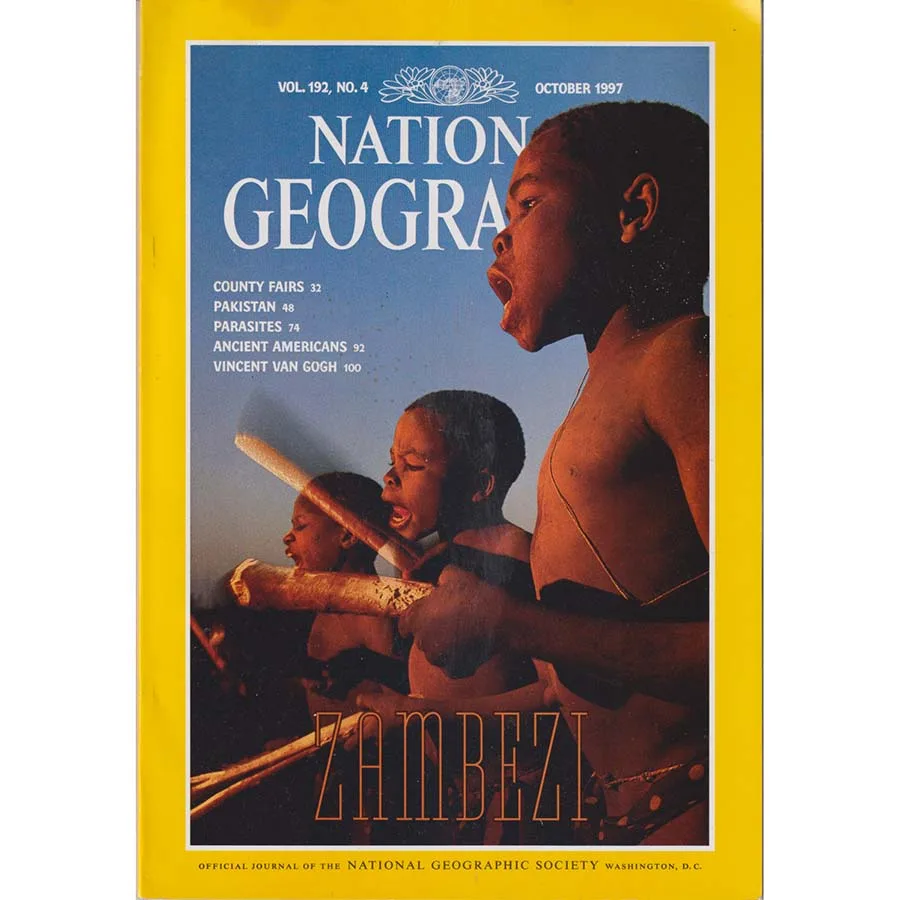
The cover headline is ZAMBEZI, and the image is pure kinetic energy: three boys mid-motion, faces set, arms working, the warm light making everything look urgent and alive. It’s the kind of photograph that tells you, without explanation, that you’re about to be taken somewhere real — not a postcard, not a brochure, but a living river world with work, play, rhythm, danger, and daily life all braided together.
Inside, this issue does the classic National Geographic thing: it hands you a whole planet, neatly stitched into one magazine, and then acts like that’s a normal thing to do.
Zambezi is the anchor feature — big river, big landscapes, big stories. Expect water as highway and border and pantry and threat; villages and wildlife; floodplains and sunsets; and that Nat Geo knack for making you feel the scale of a place while also noticing the small human details. It’s nature, culture, and the practical art of living alongside something that can feed you one day and rearrange your life the next.
But 1997 Nat Geo isn’t content with one destination. It immediately whiplashes you around the rest of the contents list like a well-meaning friend who insists you must try everything at the buffet:
-
County Fairs — a comforting detour into rural Americana, where the stakes are pies, livestock, and community pride. It’s wholesome, photogenic, and faintly hilarious that it shares a magazine with parasites.
-
Pakistan — the magazine’s serious, textured travel mode: history, complexity, geography that refuses to be summarised, and the sense that you’ve just been given a guided tour by someone who actually did their homework.
-
Parasites — because National Geographic loves balance, and nothing balances sunsets and culture like a deep dive into organisms that have made a lifestyle out of ruining your day. It’s fascinating, upsetting, and guaranteed to make you itch sympathetically for at least 20 minutes.
-
Ancient Americans — a reminder that history in this magazine is never “dusty”; it’s lived, layered, and often still present in the landscape if you know how to look.
-
Vincent van Gogh — the surprise art break, because why not end your globe-spanning journey with a painter whose inner weather system makes El Niño look understated.
Condition: Good, meaning it’s a solid, readable copy that’s done a bit of living but still has plenty of mileage left. It’ll sit nicely on a coffee table, it’ll happily swallow an evening, and it will absolutely do that old Nat Geo thing where you open it “just to have a quick look” and then suddenly you’re learning about river ecology and intestinal hitchhikers like this was always your plan.
If you want a single issue that captures the late-90s National Geographic vibe — gorgeous photography, earnest global curiosity, a little bit of dread, and a lot of “how is this all in one magazine?” — October 1997 is a cracker. Sold by Crappy Old Books, naturally: the least glamorous gateway to world-class armchair travel.
Keep browsing: See more National Geographic books Other books by National Geographic
